
Risk
Managing Risk Before It Becomes a Problem
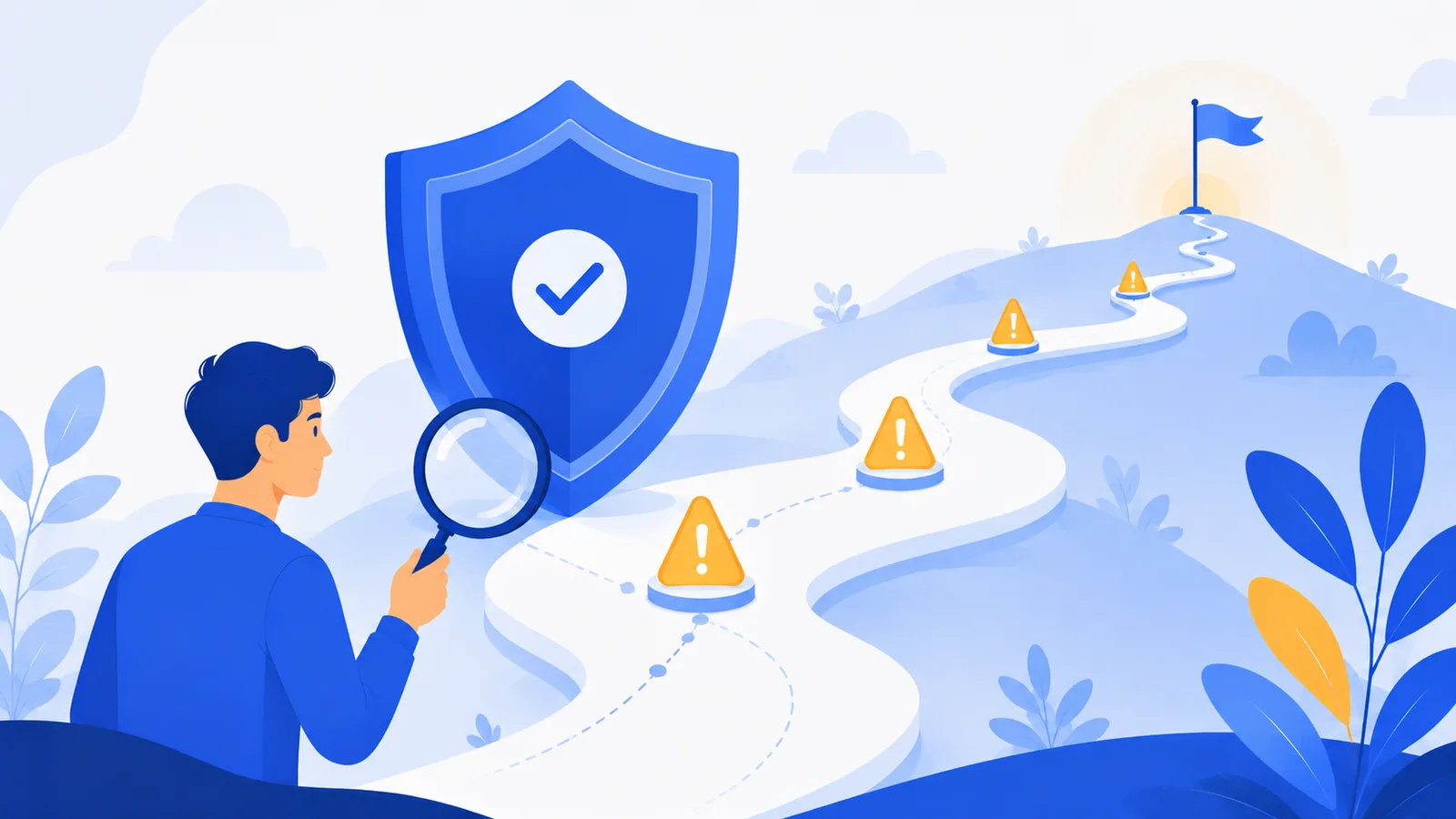
Every project carries risk. The managers who sleep well are not the ones with no risks. They are the ones who saw their risks coming. This is how I keep risk visible and act on it while it is still only a possibility.
No matter how carefully a software project is planned, one thing is always certain. Something unexpected will happen. A dependency may be delayed. A technical challenge may take longer than expected. A client may change a business priority. An outside service may become unavailable. These situations are not unusual. They are part of almost every project.
Over the years I have realised that successful projects are not the ones that avoid every risk. They are the ones that recognise risks early enough to respond before they become problems. That simple change in thinking has shaped the way I manage every project. Many people see risk as something negative and prefer not to discuss it, worried it will create unnecessary concern. I have learned the opposite. Ignoring risk does not make it disappear. It simply makes it harder to manage when it finally arrives. So I encourage open conversations about uncertainty from the very beginning. I would much rather identify a possible issue during planning than discover the same issue when deadlines are close and options are few.
For me, managing risk is not about expecting failure. It is about preparing the team to make better decisions when circumstances change. That is why I never ask whether a project has risks. I already know the answer. Instead I ask different questions. What could slow us down? What could affect the delivery date? What depends on another team? What are we assuming today? Which situations would have the biggest impact if they happened tomorrow? Those questions usually start valuable conversations. Sometimes they uncover a dependency nobody had considered. Sometimes they reveal a business decision that still needs to be made. Other times they simply confirm that the team is already well prepared. Either way, the discussion creates clarity.
Why Ignoring Small Risks Creates Bigger Problems
When people hear the word risk, they often imagine something dramatic. A major system failure. A missed delivery date. A security incident. A production outage. Those situations can happen, but they are rarely where the problem actually begins. In my experience, most project risks start as small warning signs that seem easy to ignore. A dependency has not been confirmed. A client decision is still pending. An outside team has not provided access. A technical approach has not been tested. A key team member is away for a few days. None of these looks serious on its own, so people often believe there is still plenty of time to deal with them later.
Unfortunately, projects do not work that way. Small risks have a habit of growing quietly. A delayed approval becomes a delayed feature. A delayed feature affects testing. Delayed testing affects the release schedule. Before long, one small issue has touched several different parts of the project. That is why I believe the earlier a risk becomes visible, the easier it is to manage.
One lesson I learned early is that a risk is not the same as a problem. A problem has already happened. A risk is only a possibility. That difference matters because it changes how we respond. While something is still a risk, we usually have choices. We can change the plan, reduce the impact, or prepare another approach. Once it becomes a problem, those choices narrow. So I never wait until something goes wrong before discussing it. I would rather spend time talking about possibilities than spend days recovering from avoidable issues.
Another mistake I often see is treating every risk as equally important. Not every risk deserves the same attention. Some are unlikely to happen. Others may happen but have very little effect. Then there are the risks that are both likely and capable of affecting the whole project, and those deserve immediate attention. Whenever I review project risks, I ask two simple questions. How likely is this to happen? If it does happen, how much will it affect the project? Those questions do not produce perfect answers, but they help the team focus on what matters most. Without that discussion, teams often spend valuable time worrying about minor concerns while much larger risks grow unnoticed.
I also encourage the team to think beyond technical risks. Some of the biggest challenges I have managed had nothing to do with software. A client delayed an important decision. A supplier changed their schedule. Business priorities shifted with the market. A legal approval took longer than expected. These situations can affect delivery just as much as any technical issue. Looking at risk from only one angle creates blind spots. Looking at the whole project creates better decisions.
Over time I have found that the most successful teams develop a habit of talking openly about uncertainty. Nobody is criticised for raising a concern. Nobody is expected to have every answer. Instead, people work together to understand what could happen and how the project should respond if it does. That culture makes a remarkable difference. Small concerns are shared earlier, decisions are made sooner, and alternative plans are considered before they become urgent. As a result, the project stays steady even when unexpected situations appear. That is what effective risk management really means. It is not about predicting every outcome. It is about recognising the warning signs while there is still time to act, because once a risk becomes a crisis, the conversation is no longer about prevention. It becomes about recovery, and I would always rather invest my time preventing the crisis than managing its consequences.
How I Keep Risk Visible Throughout a Project
Once a project begins, I never assume the list of risks is complete. Every week brings new information. Requirements become clearer. Development uncovers technical challenges. Clients make new decisions. Outside teams adjust their schedules. As the project changes, the risks change with it. So I treat risk management as an ongoing activity rather than a document created once and forgotten.
One habit that has helped me throughout my career is keeping a shared written list of project risks. It does not need to be complicated. Its purpose is simply to make sure everyone can see what might affect the project and what we are doing about it. Keeping risks in conversation alone is not enough. People forget details. Team members change. Priorities shift. A written list gives the project a single place where everyone can understand the current situation, and it encourages regular discussion instead of relying on memory.
I also believe identifying risks should never be one person’s job. Every member of the team sees the project from a different angle. Developers may recognise technical concerns. Testers may notice situations that have not been checked. Business users may spot process changes that affect the solution. Clients may share new priorities that influence the plan. Each of these observations can reveal a risk that others have not yet considered. So I regularly ask a simple question during project discussions. What could affect our progress over the next few weeks? It is straightforward, but it often starts valuable conversations. Someone may mention a dependency that has not been confirmed. Another person may point out a decision still waiting for approval. A developer may explain that a feature is more complex than expected. These discussions help us recognise potential issues while there is still time to respond.
Once a new risk is identified, I try to understand it from two angles. How likely is it to happen? And what would the impact be if it did? The answers are rarely exact, and they do not need to be. The point is not to calculate a perfect score. It is to understand where the team’s attention should go. A risk that is unlikely and low impact does not deserve the same attention as one that could delay the whole project. This simple way of thinking helps the team spend its energy where it creates the greatest value.
Keeping a written list is only the beginning. The real value comes from reviewing it regularly. A risk that sits on a page for weeks without discussion provides very little benefit, so I make risk reviews part of the project’s regular rhythm. Some risks disappear because they have been resolved. Some become more important because circumstances changed. New risks appear as the project moves forward. The list should always reflect the current reality, not the situation from several weeks ago.
I also believe every significant risk should have a clear owner. Someone should be responsible for watching it, providing updates, and helping the team decide what action is needed. Without ownership, it becomes too easy for everyone to assume someone else is looking after it. Clear ownership creates accountability without creating blame. And discussing risk should never create fear. The purpose is not to make people anxious about everything that might happen. It is to create confidence. When the team understands the risks, they make better decisions. When clients understand the risks, they can help remove obstacles before they become urgent. When everyone shares the same understanding, uncertainty becomes much easier to manage. For me, a healthy project is not one where no risks exist. It is one where risks are visible, discussed openly, and reviewed regularly. That simple habit has kept many small concerns from growing into major problems, because the most valuable risk discussion is usually the one that happens before anyone is forced to deal with the consequences.
Preventing Risks and Preparing for Them Are Different
One lesson I have learned over the years is that every risk deserves attention, but not every risk deserves the same response. Some risks can be reduced before they ever affect the project. Others cannot be removed because they depend on people, systems, or circumstances outside the team’s control. Understanding the difference helps me decide where to spend time and effort. Whenever a new risk is identified, I ask a simple question. Can we prevent this, or do we need to prepare for it? If the answer is prevention, I look for ways to reduce the chance of the risk becoming a problem. If the answer is preparation, I focus on making sure the project can continue even if the risk becomes real.
I remember working on a healthcare platform where one of the biggest challenges was moving patient information from an older system into a completely new application. The project involved around forty thousand patient records. The information was sensitive and accuracy was extremely important. Even a small mistake could affect patient care, create legal concerns, and damage trust. Ignoring that risk was never an option. At first it was tempting to wait until development was finished and perform the migration only once. The problem with that was obvious. If something unexpected happened during the final migration, we would discover it when time was already limited and the pressure was at its highest.
Instead, we chose a different approach. We selected a smaller group of records and carried out an early migration into a secure test environment. The objective was not to complete the migration. The objective was to learn. That decision proved incredibly valuable. The trial revealed duplicate records that had built up over many years. Some information was incomplete. Several records did not follow the format we expected. None of these issues had been visible during planning, because they lived inside the old data itself. Finding them early completely changed our preparation. Instead of facing those problems during the final migration, we corrected them gradually while there was still time. A little extra effort early prevented far greater pressure later. That experience reinforced something I still apply today. Testing a high risk activity on a smaller scale is often one of the simplest ways to reduce uncertainty, because it provides real information instead of relying on assumptions.
Not every risk can be handled that way. Some remain outside the project’s control. On the same healthcare project, the application depended on an outside identity verification service that confirmed whether medical professionals were allowed to access patient records. That service belonged to another organisation. We could not improve its performance. We could not change its maintenance schedule. We could not fix it if it became unavailable. Trying to remove that risk would have been impossible, so we prepared for it instead. We worked with the business team to define a temporary process that could be used if the service went down for a short period. It was never meant to replace the automated system permanently. Its purpose was simply to let essential work continue until the service was available again. That preparation gave the client confidence. Instead of hoping the service would never fail, we acknowledged the possibility and agreed how we would respond if it happened. The project became stronger because the team understood the situation before it became urgent.
Experiences like these have changed the way I think about risk. Managing risk is not about trying to control everything. Some things will always remain outside our influence. The real responsibility is understanding which risks we can reduce and which ones need thoughtful preparation. That distinction keeps projects realistic, and it stops teams wasting time trying to solve problems that cannot be removed. Instead, they put their energy where it creates the greatest value. Prevent what you can. Prepare for what you cannot. When teams understand that difference, unexpected situations become much easier to handle, because they are no longer completely unexpected.
Common Mistakes I Still See
Over the years I have seen many projects run into avoidable difficulties. Most of the time, the problem was not that the team failed to identify a risk. The problem was that they did not act on it early enough.
One common mistake is believing that risk management only happens at the start of a project. A list of risks is created during planning, everyone agrees with it, and then it is never reviewed again. As the project changes, new risks appear while older ones fade, and if the list does not change with the project, it quickly loses its value.
Another mistake is relying too much on optimism. People assume everything will go to plan because similar work has been done before. Confidence is valuable, but assumptions should always be tested. Every project is different. New people, different clients, changing priorities, and unexpected dependencies can all create fresh challenges.
I also see teams focusing only on technical risks. Technology is only one part of a successful project. Business decisions, delayed approvals, limited resources, outside suppliers, and changing priorities can have just as much impact as technical challenges. Looking at only one side of the project creates unnecessary blind spots.
Sometimes teams identify a risk but never decide who is responsible for it. Without clear ownership, everyone assumes someone else is managing it, and the risk receives little attention until it becomes a real problem. Clear ownership helps make sure important risks are reviewed, updated, and acted on when needed.
Perhaps the biggest mistake is believing that discussing risks creates negativity. In my experience, the opposite is true. Open conversations build confidence. When everyone understands the challenges, they can work together to reduce uncertainty instead of reacting under pressure. The strongest teams are not the ones with the fewest risks. They are the ones that recognise risks early, discuss them honestly, and respond before those risks affect the project.
The Biggest Lesson I Have Learned
If there is one lesson that has stayed with me throughout my career, it is this. Every project carries uncertainty, and no amount of planning can remove it completely. The goal of risk management is not to predict everything that might happen. The goal is to make sure the team is ready to respond when something unexpected does.
I have never managed a project where every task went exactly as planned. Requirements changed. Priorities shifted. Dependencies moved. Unexpected challenges appeared. That is simply the reality of delivering software. What makes the difference is how early those situations are recognised. A small concern raised today is much easier to manage than a major problem discovered a week before release. So I encourage people to speak openly whenever they notice something that could affect the project. No concern is too small to discuss. Many of the biggest problems I have avoided started as simple questions in a project meeting.
Risk management has also taught me something about leadership. People do not expect project leaders to have every answer. They expect honesty. If a risk exists, acknowledge it. If more information is needed, say so. If the plan needs to change, explain why. Clear communication builds trust far more effectively than pretending everything is perfect. Today I no longer see risk as something that threatens a project. I see it as valuable information. Every risk we identify gives the team a chance to make a better decision before the situation becomes more difficult. That is what successful risk management has always been about: creating enough visibility that the project stays in control, even when the unexpected arrives.
Key Takeaways
- Accept that every project has risks, whatever its size or complexity.
- Identify risks early instead of waiting for problems to appear.
- Keep a shared written list of risks and review it regularly.
- Encourage the whole team to raise concerns and share new risks.
- Focus first on the risks most likely to affect the project.
- Understand the difference between preventing a risk and preparing for one.
- Create backup plans for situations that are outside your control.
- Review and update risks throughout the project, not just once.
- Remember that honest conversations about risk strengthen projects rather than weaken them.
- The earlier a risk becomes visible, the easier it is to manage.
Final Thoughts
Risk is often treated as something to avoid talking about. I have learned that the opposite approach works far better. The sooner a team talks about uncertainty, the more choices it has. That does not mean every risk can be removed. Some situations will always remain outside our control. What matters is recognising those situations early, understanding their possible impact, and deciding how the project should respond.
Over the years I have found that successful projects are not defined by the absence of risk. They are defined by the quality of the conversations that happen before problems appear. Those conversations create better plans, stronger teamwork, and greater confidence throughout the project.
If there is one idea I hope you take from this article, it is this. Managing risk is not about expecting the worst. It is about preparing for the unexpected. When risks stay visible, decisions become clearer. When decisions become clearer, projects become more predictable. And when projects become more predictable, teams can spend less time solving crises and more time delivering value. That is the approach I continue to follow on every project, whatever its size, its industry, or its complexity.